

This is the last post in a four-part series about what I learned at a weekend sesshin at Ryumonji Zen Monastery. Part one was about oryoki and the knot. Part two was about chanting the lineage. Part three was about the shuso ceremony and a koan I’m still carrying.
This one is about the practice underneath all of it: sitting. Eight hours of zazen over one weekend. The agony and the ecstasy, and I mean both words literally.
What zazen is
Zazen is seated meditation, the heart of Zen practice. You sit upright on a cushion, facing a wall, eyes lowered but open, and you stay there. At Ryumonji we sat in periods of forty minutes, broken by ten minutes of kinhin, slow walking meditation that keeps you in a meditative state while giving your body a break, and then forty minutes more, several rounds a day.
Why do people do this? The honest answer is strange: zazen is goal-less. It isn’t for relaxing, reducing stress, or optimizing anything. The practice is to be present with what is actually happening, which turns out to be one of the hardest things a person can do. Not a trance. Not an escape. The opposite of escape: staying.
From the outside, it barely looks like anything. At one point my mind wandered into imagining a visitor arriving at the monastery, someone who didn’t understand zazen. They would walk the grounds looking for people and find no one. Eventually they would reach the meditation hall and see a room full of humans facing the wall. Completely awake. Eyes open. Noticing everything, moving nothing. Someone would rise quietly to attend to them, but how strange it would seem from the outside. Then I noticed my mind had drifted, and I brought it back to the moment.
In part one I described a pattern: things look easy, become overwhelmingly hard, and become easy again. Sitting corrects that story. It isn’t easy, then hard, then easy, finished. It’s waves. Ease and difficulty keep arriving, all weekend, and as far as I can tell, for a lifetime. The practice isn’t reaching the shore. The practice is the waves.
The body keeps the score
Here is something you may not know if you haven’t meditated for long stretches: it can be intensely, physically painful. Sometimes without any explanation you can find. The body sits still, doing nothing, and begins to burn and throb and shout. Bessel van der Kolk titled his book on trauma The Body Keeps the Score, and long sitting demonstrates the point. Our bodies hold stories, and when everything else goes quiet, they start telling them.
The instruction is not to suppress any of this. It’s to meet it. An itch rises, and instead of scratching on autopilot, you investigate. What does it actually feel like? How deep does it go? What does it bring up, and why? Will it pass without being scratched? The discipline is curiosity without attachment: don’t cling to your first thought about the itch, or your second. This applies to far more than itches.
Pain is where that discipline gets tested, and where mine failed in an instructive way.
I have a history with not moving. When I first started meditating, having to move made me angry at myself. It felt like a failure of control, an imposition on everyone around me. The person on the next cushion is perfectly still. Why can’t I do that? Without noticing, I had turned stillness itself into an attachment.
The weekend found that attachment quickly. During the first two sittings my cushion was firmer than what I use at home, which pushed my posture into an alignment that was wrong for my body. Throbbing pain built in my legs until one of them fell asleep. I stayed completely still through all of it, because I felt I was supposed to. In zazen we practice letting go of attachments, and there I was, attached to being still. In agony, quietly, on principle.
Later that weekend I described all this to one of the priests, and he delivered the most perfectly Zen answer.
“You can move.”
I chuckled. My old attachment to not moving had followed me all the way to Iowa. The point was never immobility. We don’t chase the body’s every whim and itch. But when agony is blocking presence, the answer is one sentence long: shift your posture.
That’s what I love about Zen. It’s so simple. And it isn’t.
The mind makes its bids
The most common misconception about meditation is that the goal is to stop thinking. It isn’t, quite. The practice is to be in the present moment: not in memories, not in plans, not in stories or worries. The monkey mind bids constantly for our attention, and it’s very good at its job. Fighting it isn’t the practice either. You notice you’ve been carried off, you acknowledge it without judgment, and you return to what’s here. With curiosity: how does this feel, in this moment? Then the mind wanders again, and you return again. Waves, once more.
Eight hours of this is not eight hours of serenity. Some sittings passed with my mind wandering the entire forty minutes. During others I mostly wished I hadn’t come. Many were negotiations with numbness, itching, or pain. And some were something else entirely: fully present, in a hall of people with whom I share a lineage and an ethical framework, though our vocations and paths differ completely. Connection and irritation traded places without warning. One sitting I felt joined to everyone and everything; another, I was mostly annoyed at the young college student nearby who would not stop moving.
That student turned out to be the weekend’s quiet teaching. When we finally talked, he reminded me intensely of my son. It was his first time meditating. Ever. He had signed up for a silent retreat with eight hours of sitting out of pure curiosity, probably without knowing what he’d agreed to, and he stayed for all of it. The annoyance dissolved on contact. What he did was incredible. Every cushion in that hall held a story like that, and my irritation had been a story too, one more thing to notice and release.
The ecstasy arrived on the same schedule as everything else: unearned and unplanned. The 5:30 morning sittings, the ones I had dreaded most as someone who needs more sleep than she wants to, became the most meaningful of the weekend. Ninety minutes of stillness while the sun crossed the room, its light moving over the floor slowly enough that only a quiet mind would catch it. On the last morning, the entire sitting filled with overwhelming love and gratitude. Not pride, not accomplishment. Love for everything, and gratitude to be alive and experiencing it alongside these particular people. It came in a wave, like the pain had. I didn’t earn either one.
What does this mean for evaluation?
Zazen is goal-less, and I try to honor that. So consider these not outcomes but things the cushion keeps teaching me that follow me to work.
Sitting has taught me to slow down and to reserve judgment a beat longer than feels natural. To stay present in the meeting, the interview, the dataset. Repetition invites autopilot; the fifteenth site visit and the fortieth survey response blur unless you treat them with the same curiosity as an itch. What comes up for us when we look at the shape of this data? Not only what it says. What it brings up, and why. And beneath every finding, the quietest question I know: how do I know what I think I know?
The waves matter just as much. Evaluation work arrives in waves. Projects feel easy, then impossible, then easy again. Findings we welcome trade places with findings we resist. Seasons of connection to the work alternate with seasons of wishing we hadn’t come. Clarity is not a shore we land on. The practice is noticing where we are in the wave, and returning.
And when the pain is structural, when the cushion itself is wrong for the body, remember the priest. Nobody is obligated to sit in agony on principle. The timeline breaking the team, the method harming the community, the indicator nobody believes in: you can move. Discipline is not attachment to a posture. It’s so simple. And it isn’t.
That’s the end of the series. Four things came home with me from the Dragon Gate: a knot, a chant, a drum, and a cushion. The sesshin ended. None of them have.
Glad to be riding the waves with you.
Anthralytic builds evaluation software for the long practice: tools that help organizations stay present with their data, ride the waves, and notice what comes up.
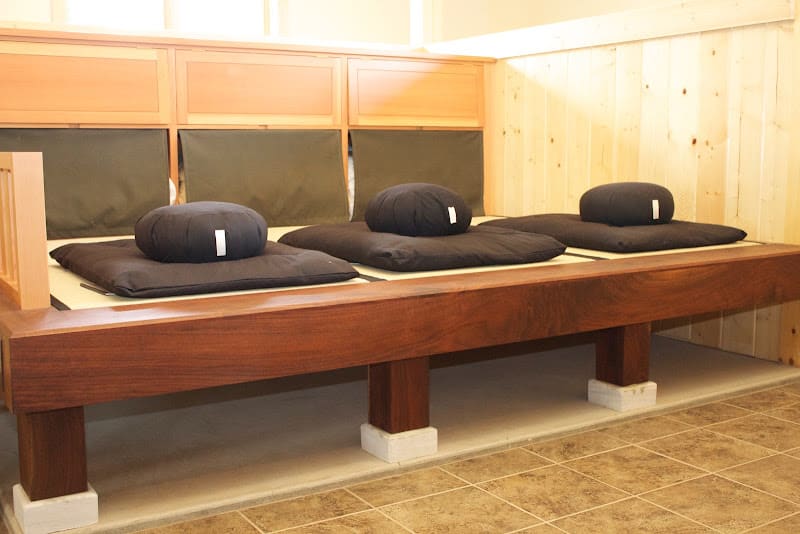
The meditation cushion (rightmost) where I spent eight hours over the weekend